Mold Removal in East Biloxi, MS
East Biloxi is the narrow end of the peninsula east of I-110 — the casino row on the Sound, the seafood plants on the bay, and the old neighborhoods between them out to Point Cadet. This is where Katrina hit hardest in 2005: the surge came over the beach and up from the bay at the same time and met in the middle. Whole streets of shotgun houses and cottages were lost. What replaced them is elevated construction on pilings, some of it built fast, alongside older houses that were gutted and reoccupied.
Mold in East Biloxi? Call and describe what you see or smell and what got wet. If we’re on a job, you’ll get a scheduled callback from a number you’ll recognize.
Mold in East Biloxi
Rebuilt after 2005? Tell us if a room never dried right — a house closed up before the framing was dry is whole-home mold remediation territory. In the elevated houses, the open space underneath breathes bay air all summer and condenses on cold ductwork, and the smell comes up through the floor.
We Cover East Biloxi — Call Us Now
Say where it is, what got wet, and when the water showed up. We remove mold; we don’t test or assess.
Call and tell us what you found.
Services Available in East Biloxi
Attic Mold Remediation
A gray streak on the roof deck after a lifted shingle, matted insulation under a ceiling stain, or a bath fan blowing steam into a Biloxi attic that never cools off. Cleaned in place with the hatch sealed off from the rooms below.
Bathroom Mold Removal
The spot on the ceiling above the tub that comes back after every scrub, a soft wall behind the toilet, a vanity floor that stays damp. Small rooms with no dry season, and removal that holds once the moisture is dealt with.
HVAC and Duct Mold Remediation
The air runs most of the year here, and a musty blast when it starts is the tell. Growth at the coil, in the plenum, or in sweating flex duct through the attic — cleaned or replaced so the system stops carrying it room to room.
Crawl Space Mold Remediation
Older raised houses along the Back Bay and everything lifted onto piers after 2005 have a damp space underneath. Joists and subfloor cleaned, wet insulation out, and a plain answer on what has to change for it to stay dry.
Mold Odor Removal
That musty smell has a source. One closet, one bedroom, or the whole house every time the air kicks on — we find the wet material behind the smell and take it out instead of covering it up.
Mold Removal
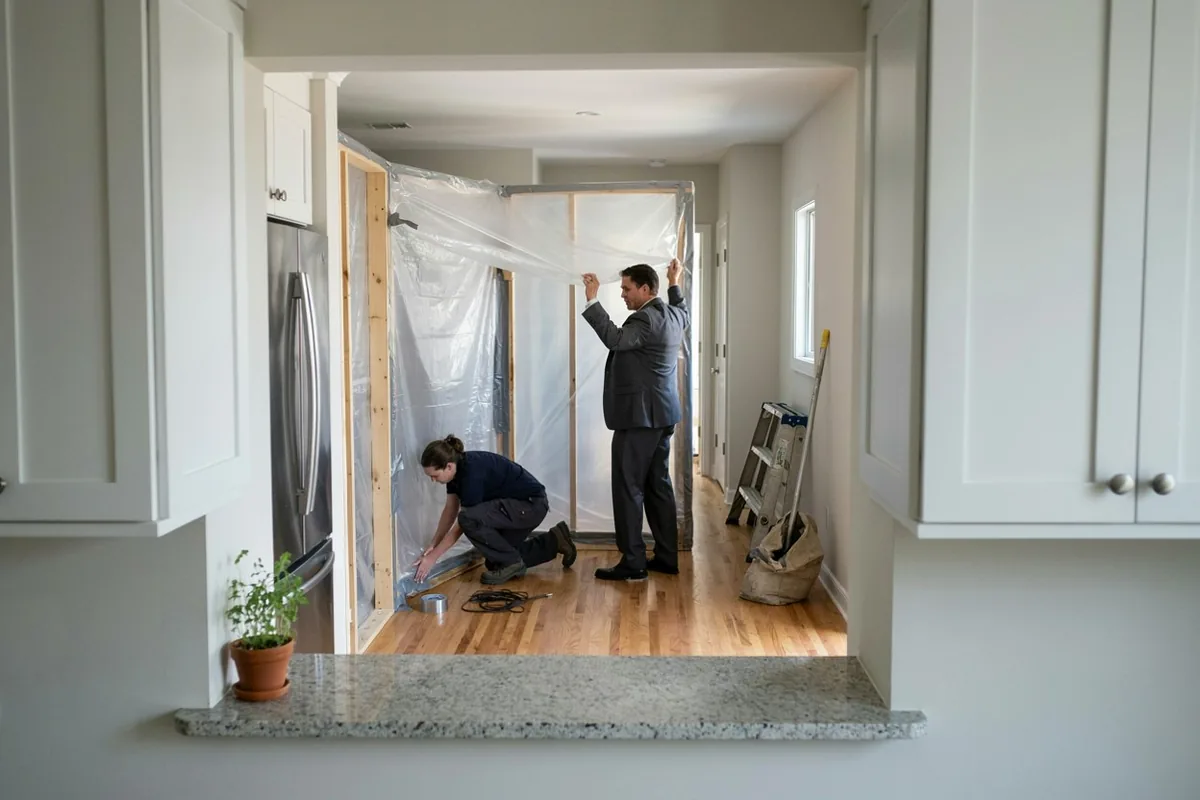
Sealed work area under negative pressure, the wet drywall, trim, and insulation out of the house, and the framing cleaned and dried before anything closes back up. Then a written report of what came out and why.
Black Mold Removal
A dark patch spreading on a ceiling, a baseboard, or the back of a closet gets the same removal as every other color. CDC says the type doesn’t change the job — the moisture that fed it is what we chase.
Whole-Home Mold Remediation
A water line on every wall, a roof that leaked through a whole summer, or a house that sat closed and damp after a storm. Room-by-room containment and removal on one plan, with one report at the end.