Crawl Space Mold Remediation in Biloxi, MS
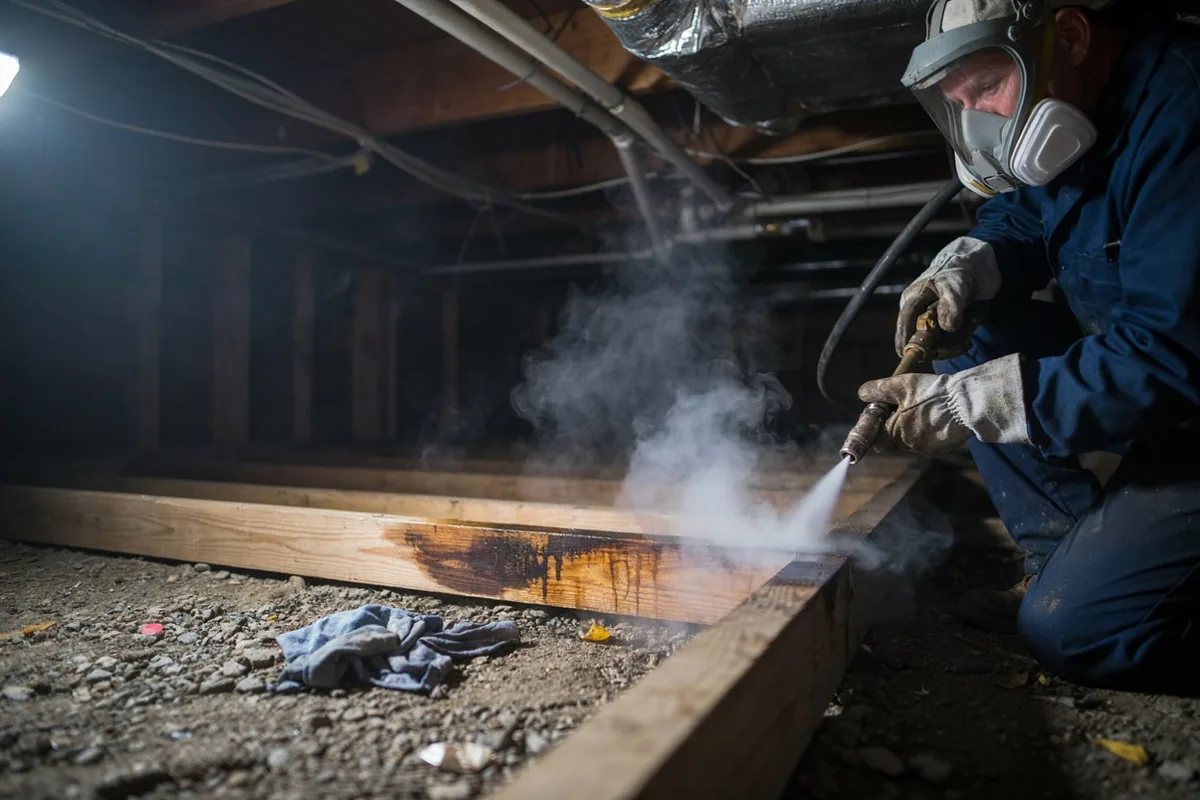
The floor in the back bedroom has a soft spot near the wall. Or a smell comes up through the boards after every rain, or you shone a light under the house and the insulation is hanging out of the joist bays in wet gray sheets. A lot of Biloxi sits on piers — the old raised houses on the Back Bay and Point Cadet, and everything lifted onto pilings after 2005 — and the space underneath breathes humid Gulf air all year. Call and tell us what you found under the house. We handle crawl space mold in Biloxi, D’Iberville, and the eastern Mississippi Gulf Coast.
Why the space under the house stays wet
Ground moisture rises off bare dirt, and houses on the Back Bay side deal with ground moisture that beachfront slabs don’t. Warm humid air moves through the vents and condenses on cold pipes, ductwork, and the underside of the subfloor. Downspouts dump against the piers, the yard drains toward the house, or a plumbing line under the kitchen has been dripping into the dirt for a year. Wood that stays damp supports growth on the same 24–48 hour schedule EPA gives for any wet material, and under a house nobody notices for months.
What’s under the floor matters as much as what’s on it
- Some mold starts out of sight, and the underside of a subfloor is the place a homeowner looks last.
- Dry now doesn’t mean it stayed dry — the dirt under a house holds water long after the yard drains.
- A smell that comes up through the floor after rain has a source you can’t see from the room.
- Wet insulation in the joist bays can’t be cleaned; it comes out.
Tell Us What You Found Under The House, 24/7
What the work looks like
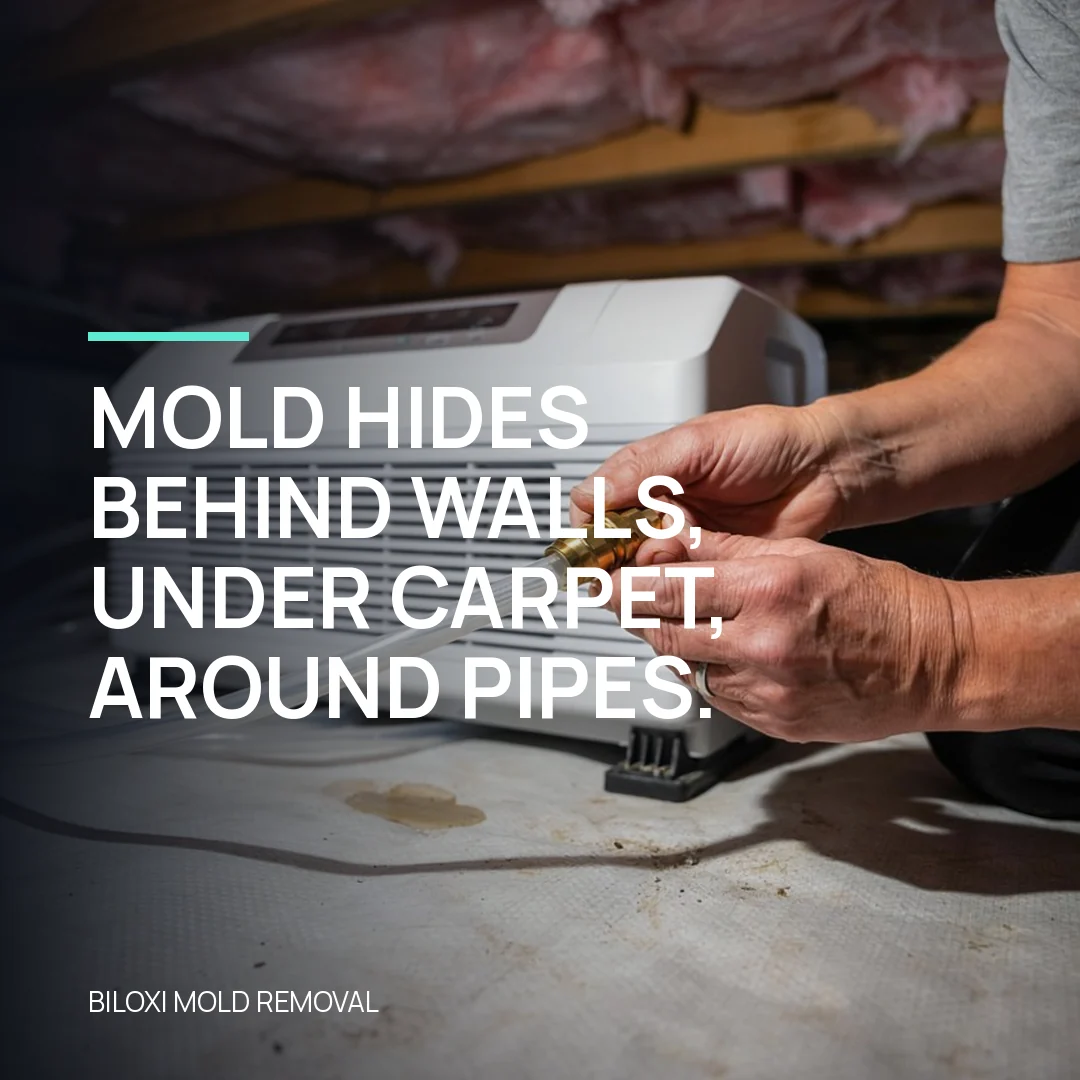
The crawl space gets isolated from the rooms above and put under negative pressure. Wet, moldy insulation comes out of the joist bays in bags. Joists, girders, the underside of the subfloor, and the piers get cleaned in place, then HEPA-vacuumed. Standing water and wet debris on the ground come out. Nothing gets re-insulated until the wood reads dry. Then we tell you what has to change — the grading, the downspouts, the vents, a ground cover, the leaking line — so the space stays dry after we leave.
Biloxi notes
The old raised houses along the Back Bay and on Point Cadet have been over damp ground for a century, and a lot of them took surge under the floor in 2005. The houses lifted onto pilings after Katrina are newer underneath but open to the same air, with ductwork and plumbing hanging in it. If the floor is soft, the room smells after rain, or the light under the house showed you something gray, call and describe it.